
Reader notice:
This blog contains discussion around eating disorders and disordered eating behaviours. Please take care while reading and seek support if you are affected by any of the topics mentioned.
This feature comes from Active IQ Ambassador Robyn Drummond, who bravely shares her personal story and the experiences that shaped her passion for raising standards in the fitness industry.
Robyn opens up about her early years in fitness, the pressures of social media, and how misinformation online impacted her relationship with food and wellbeing. Her journey is a powerful reminder of why education, qualification, and accountability are vital in our industry — and why change is needed now more than ever.
By Robyn Drummond, Active IQ Ambassador
There is more misinformation circulating online than ever before when it comes to exercise, nutrition, and wellbeing, and it’s time for change.
Right now, there is a huge rise in social media influencers who are seen as “experts” simply because they have large social media followings. This is becoming extremely harmful, damaging body image, destroying relationships with food, and creating more distortion around what is actually correct when it comes to health. Not only that, we’re seeing more scams than ever, preying on vulnerable and naive people who are just desperate to feel good long-term, and it has to stop.
The saddest part is this...
The two most common reasons people seek help in health and fitness are...
- Weight management
- Mental wellbeing
And yet, the conflicting, inaccurate, and unregulated content online is actually making weight management harder and harming mental wellbeing in the process, creating even more guilt and confusion.
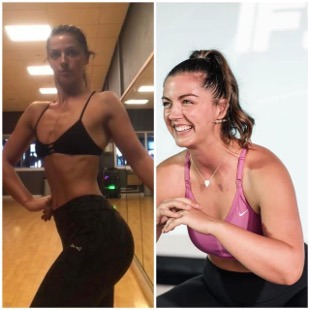 I know this because I was that person, and this is the reason why I do the job I do now.
At 18, I had not long qualified as a gym instructor, but I didn’t have much experience. I felt self-conscious and believed I didn’t “look like a PT,” so I became heavily influenced by social media and bikini bodybuilding models online. I decided that if I could look like that, then I would be successful. These women had thousands of followers on Instagram, so I assumed that was what success looked like.
I signed up with two local coaches over a four-year period, embarking on a bikini bodybuilding diet that was extremely restrictive. Over the years that I did this, I worked with unqualified individuals who did not take my well-being seriously.
After finishing prep, I became very unwell. I developed an eating disorder. I couldn’t eat anything without guilt. I took Tupperware to family occasions because I was terrified of eating a “normal” meal. I didn’t like eating food in front of others in case they were judging me, and I often ate in excess after long periods of restriction. For a long time afterwards, any food I did eat made me physically unwell.
I had no support afterwards, and no one identified that something was seriously wrong. I was just left with it.
This is why I am so passionate about the job I have now. Through becoming an online coach and instructor, I have overcome these struggles by helping others, and it is now my mission to reduce misinformation, educate young people in schools, and be actively involved in campaigns like this.
Because this is extremely harmful to people’s health, to their body image, and to their relationships with food. We must create more awareness around it.
Over the last few years, I’ve watched more and more platforms position people as authorities purely because they have influence, not qualifications. When it comes to health, fitness, and nutrition, that is incredibly dangerous. Yes, having a following can help someone grow their business (when they act ethically), but it does not qualify someone to issue health information.
I’ve watched extreme diet trends go viral overnight. I’ve lost count of the “new hacks” being shared with zero scientific backing and zero consideration for someone’s physical or emotional well-being.
“What I eat in a day” videos where what I eat vs what you eat is completely irrelevant to each other. Exercise platforms still encourage spot reduction and excessive movement. And now a rise in local clubs claiming to be “nutrition-focused” while operating deceptively.
This content is preying on vulnerable and naive people who are just desperate to feel good long-term and overcome their struggles. People who are already overwhelmed, already hurting, already confused, and instead of being helped, they’re being sold lies, shortcuts, quick fixes, and body-obsessed messaging that pulls them further away from genuine health.
I’ve seen it shatter confidence. I’ve seen it damage relationships with food. I’ve seen it create fear, fear of carbs, fear of eating out, fear of gaining weight, fear of not looking a certain way, and fear that leads to excessive exercise.
And for what?
Views. Follows. Sales. Engagement.
This is the reality, and it’s why change is no longer optional. It’s essential.
People deserve accurate information. They deserve to feel safe. They deserve guidance that supports their mental health and does not damage it. And they deserve to trust that the person they’re learning from is actually qualified to help them.
That’s why I’m so proud to introduce Active IQ’s new campaign, “Trust Your Trainer”, launching this November. This movement is designed to highlight the importance of being qualified, accredited, and accountable before creating or sharing health and fitness information.
Over the coming weeks, I and the incredible Active IQ ambassador team will be highlighting the dangers of misinformation, sharing real experiences, and providing clarity on what the public should look for in a trainer, coach, or mentor. This isn’t just an Active IQ effort — we’re also seeking support from CIMSPA and ukactive to stand with us, back this movement, and help make real industry-wide change.
I truly hope you see the importance of this campaign and stand with us — to elevate qualified professionals on social media platforms and to call for these platforms to take accountability. They have a responsibility to safeguard the content shared on their channels and protect the public from misleading, harmful information.
Because “Trust Your Trainer” isn’t just a campaign — it’s a call to bring honesty, safety, and standards back into an industry that’s lost its way on social media. Together, we can create an environment where people feel informed instead of intimidated, supported instead of sold to, and empowered instead of overwhelmed.